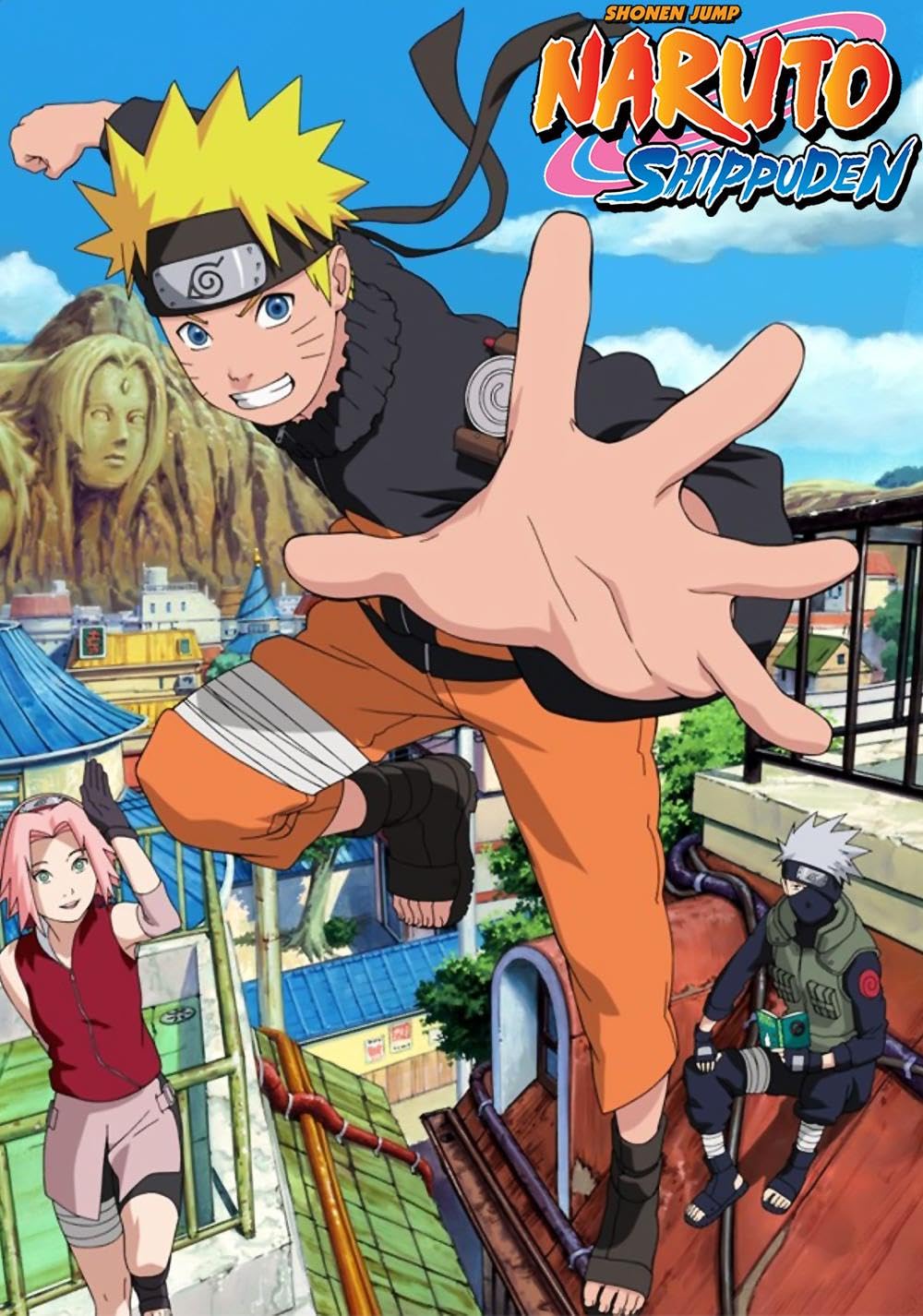
About this guide
A spoiler-light roadmap through Naruto: Shippuden's major canon story, from the rescue mission to the final conflict.
Before Shippuden
Naruto: Shippuden continues the original Naruto series after a time skip. New viewers should understand Team 7, the Chunin Exams, Sasuke's departure, and the Akatsuki setup before starting. Shippuden assumes those relationships already matter.
Kazekage Rescue
The opening reintroduces Naruto and Sakura while placing Gaara at the center of an Akatsuki operation. It establishes the increased scale, the cost of tailed-beast politics, and how much the younger ninja have changed.
Tenchi Bridge and the search for Sasuke
Team 7 changes shape and follows intelligence that may lead to Sasuke. The arc tests Naruto's control, introduces new team dynamics, and makes clear that wanting a friend back is not the same as knowing how to reach him.
Akatsuki suppression
The focus broadens to other Leaf ninja as the Akatsuki threat becomes more personal. Strategy, mentorship, and grief drive some of Shippuden's most grounded battles. Give the supporting cast room; the series is stronger when the village feels larger than Team 7.
The pursuit of Itachi
Several storylines converge around the Uchiha brothers. Long-standing assumptions are challenged, and Sasuke's goal becomes more complicated than revenge against one person. Avoid searching Itachi if you have not reached this section.
Pain's assault
This is a major thematic and emotional peak. Naruto faces an enemy whose argument is connected to the same cycle of suffering that shaped many earlier characters. The arc measures growth through more than a new technique.
Five Kage Summit
The political world responds to escalating threats while Sasuke moves further from the person his old teammates remember. Alliances become unstable, and the meaning of protecting the village is contested from several directions.
Fourth Shinobi World War
The final long saga assembles generations, resolves old conflicts, and greatly expands the scale of battle. Because it contains many parallel fronts and flashbacks, it benefits from steady viewing rather than large gaps. The emotional through-line remains whether bonds can interrupt inherited violence.
Should you skip filler?
Anime-original episodes vary. Some add character time or expand the world; others interrupt urgent story momentum. First-time viewers can use an episode guide to identify anime-original runs, but should judge them by interest rather than treating every non-manga episode as worthless. Never skip an episode merely because it contains a flashback without checking whether new story material surrounds it.
Best viewing approach
- Finish the original Naruto first.
- Watch major canon arcs in broadcast order.
- Pause after emotional peaks instead of rushing into the next conflict.
- Use spoiler-free summaries when returning from a long break.
Shippuden works best as the second half of one coming-of-age story. Its length is easier to manage when you follow emotional goals—Naruto's promise, Sasuke's changing purpose, and Kakashi's generation—rather than watching only for the final war.
Using this arc guide on a first watch
Treat each major arc as a stopping point for review rather than skipping directly to its final battle. The official Naruto site maintains episode summaries, which are safer for confirming your place than searching character outcomes. Keep the linked Naruto, Sasuke, Sakura, Kakashi, and antagonist profiles for after the corresponding arc, and check optional material against a transparent episode list before skipping it.